

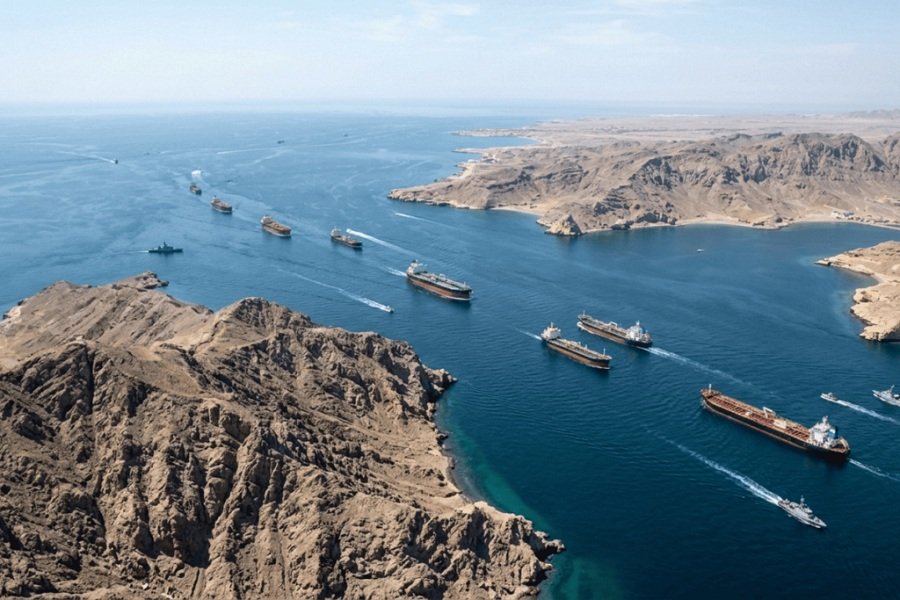
Dr. Ahmed Essa Al-Sulaiti, President of the ILA GCC Branch, has recently characterised Iran’s closure of the Strait of Hormuz as an international crisis requiring urgent action. His call is timely and necessary. The crisis, however, does not call upon any single legal doctrine; it engages a full legal architecture. A brief survey of that architecture – its three principal pillars – may assist counsel, States and institutional actors in preparing a coherent and proportionate response.
The private-law pillar
The civil codes of the Gulf – the Qatari Civil Code (Law No 22 of 2004, art 188), its Omani counterpart and the newly codified Saudi Civil Transactions Law — recognise force majeure, yet treat supply contracts as obligations of result. The test for relief is correspondingly demanding: the event must be external, unforeseeable and render performance objectively impossible. Kuwait’s further declaration of 20 April 2026, following the cascade from QatarEnergy, Shell, the Kuwait Petroleum Corporation and Bapco, will need to be justified against that standard. Parallel doctrines of hardship and frustration remain relevant under applicable law, as do questions of mitigation; the courts of the GCC have consistently declined to recognise concurrent excuse, and the precise causal chain will, in any subsequent proceedings, be decisive.
The public-law pillar
The Strait is governed by the right of transit passage under Article 38 of the United Nations Convention on the Law of the Sea, and, during armed conflict, by the customary framework reflected in the 1994 San Remo Manual on International Law Applicable to Armed Conflicts at Sea. A sustained closure is not only a private commercial event; it is a potential breach of obligations owed to the international community as a whole. The doctrinal consequence is significant: remedies and attributions run to States as well as to counterparties, and forums ranging from the International Court of Justice to the International Tribunal for the Law of the Sea stand available where the underlying conditions are met.
The dispute-resolution pillar
The Qatar International Court and Dispute Resolution Centre (QICDRC), the Qatar Financial Centre (QFC) Authority Court QFC, the DIFC Courts, the Abu Dhabi Global Markets Courts (ADGM), the Bahrain International Commercial Court (BICC) and its leading arbitration institutions (the Qatar International Center for Conciliation and Arbitration, Abu Dhabi International Arbitration Centre (arbitrateAD), the Saudi Center for Commercial Arbitration (SCCA), the Kuwait Commercial Arbitration Centre, the Oman Commercial Arbitration Centre, and the GCC Commercial Arbitration Centre, together with emergency arbitration under leading institutional rules) – is uniquely placed to absorb the commercial spillover of the closure with speed and sophistication.
The three pillars are complementary rather than alternative. Dr. Al Sulaiti’s call for urgent international action will be answered, in part, through the coherent exercise of this architecture: diplomatic urgency met by rigorous private-law discipline, principled public-law engagement and swift institutional dispute resolution. Together they afford the Gulf’s commercial and sovereign actors — and the wider international community — a proportionate response to what may prove among the most consequential maritime disruptions of the decade.
References:
– Ahmed Essa Al-Sulaiti, ‘Iran’s Closure of the Strait of Hormuz is an International Crisis’ (Al Jazeera, 25 March 2026) https://www.aljazeera.com/opinions/2026/3/25/irans-closure-of-the-strait-of-hormuz-is-an-international-crisis accessed 21 April 2026.
– Kuwait Declares Further Force Majeure on Oil Shipments on Hormuz Halt’ (Bloomberg, 20 April 2026).
– United Nations Convention on the Law of the Sea (adopted 10 December 1982, entered into force 16 November 1994) 1833 UNTS 3, art 38; San Remo Manual on International Law Applicable to Armed Conflicts at Sea (adopted 12 June 1994).