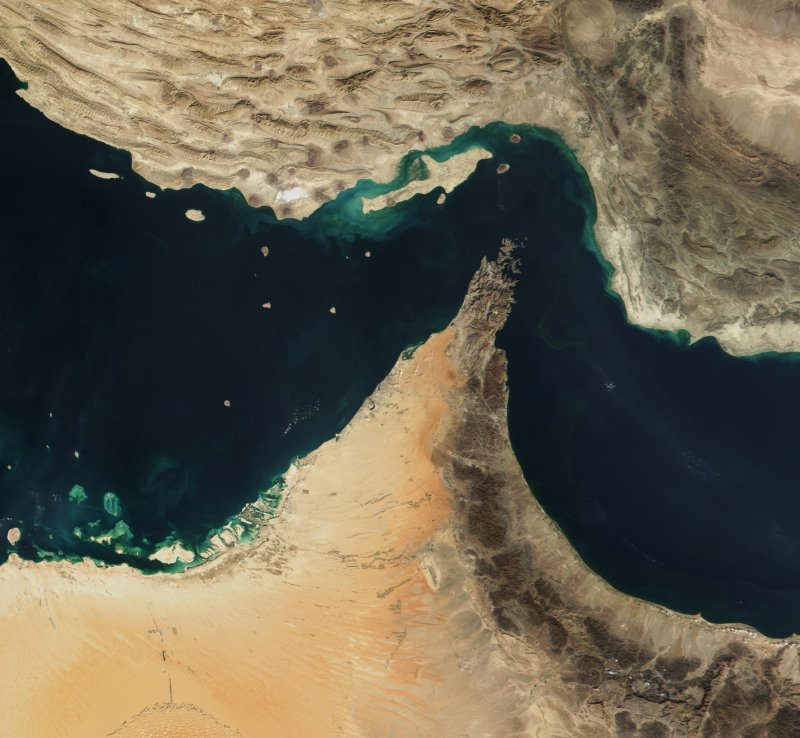
For a time period which has lasted more than two weeks, the Strait of Hormuz has experienced significant maritime disruption. This has manifested as vessel attacks and blockades of crucial economic supplies as ships have been stuck on the two ends of the straight.
Beyond the regional impact, this situation has global repercussions as the strait serves as the principal gateway for several Gulf Cooperation Council (GCC) states to global markets. The strait also exists as a strategic corridor as an estimated 20 percent of global petroleum and nearly a fifth of global liquified natural gas (LNG) passes through it.
In this article on the Strait’s closure and the international impact, the President, International Law Association and Lecturer, College of Law, Hamad Bin Khalifa University, Ahmed Essa Al-Sulaiti, discusses the key issues associated with this blockade and the possible violation of international law. He also draws on legal references from the International Court of Justice alongside international conflict legislation such as the 1994 San Remo Manual on International Law Applicable to Armed Conflicts at Sea.
The article also raises a major concern with the Strait’s blockage centering around the invocation of force majeure by energy companies in the region (QatarEnergy, Shell, Kuwait, Petroleum Corporation, and Bapco). This is an unprecedented decision in the Gulf’s oil and gas history and underlines the urgency of the situation. From a trade perspective, Gulf countries have been forced to close crucial facilities while rerouting supply through pipelines.
Most importantly, the article calls for urgent action by the international community in protecting navigation through the Strait of Hormuz and curtailing disruptions to domestic energy security and global market stability.
Read the full article: https://www.aljazeera.com/opinions/2026/3/25/irans-closure-of-the-strait-of-hormuz-is-an-international-crisis
Iran’s Closure of the Strait of Hormuz is an International Crisis. As such, it requires urgent action – ILA GCC President, Ahmed Essa Al-Sulaiti
